
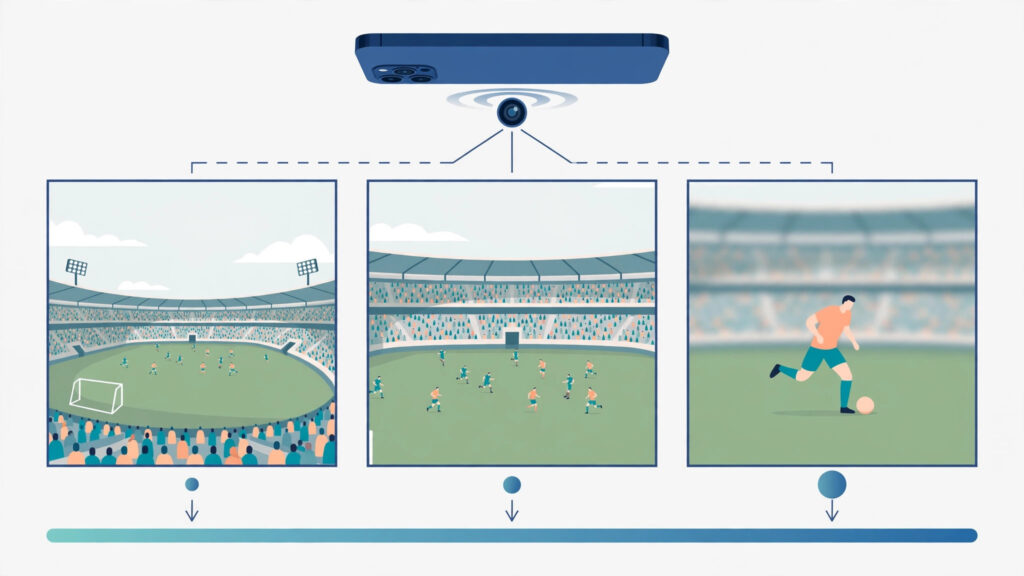

The camera race has a new headline number. Late-2026 flagships are arriving with 200-megapixel sensors and zoom claims that sound like science fiction — 100x zoom, from a phone, in your pocket. Motorola’s signature 27 carries a 200MP periscope telephoto with 100x Super Zoom Pro. OPPO is pushing its LUMO image engine on the Find X10 Pro Max. Google’s Pixel 11 counters with software tricks like Magic Capture and a faster Instant Night Sight.
So is this a real improvement, or marketing with extra zeros? The honest answer is: both. Some of what these cameras do is genuinely better than anything phones could do two years ago. And some of the biggest numbers describe something quite different from what most buyers imagine. This guide separates the two.
What “100x Zoom” Actually Is
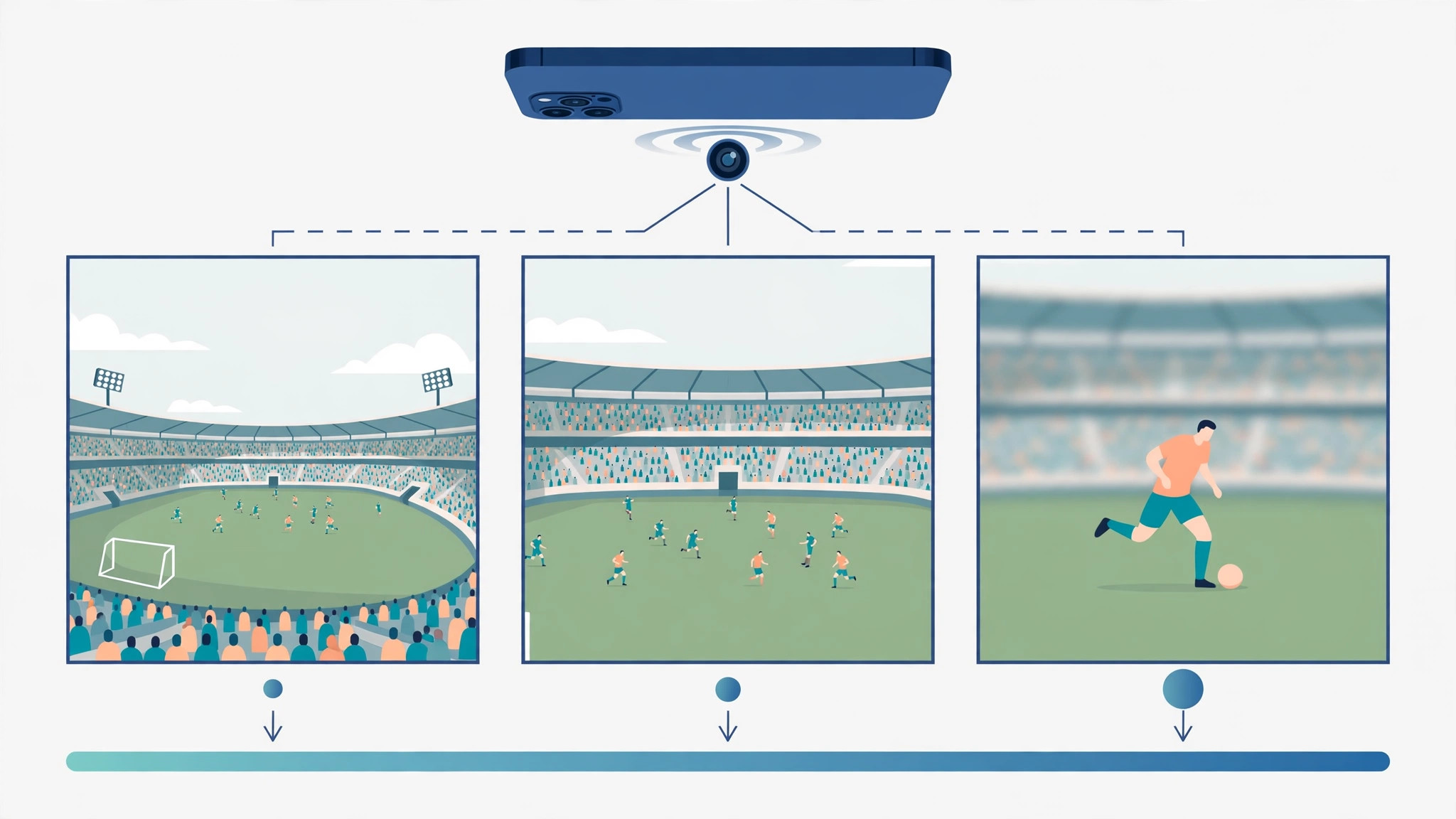
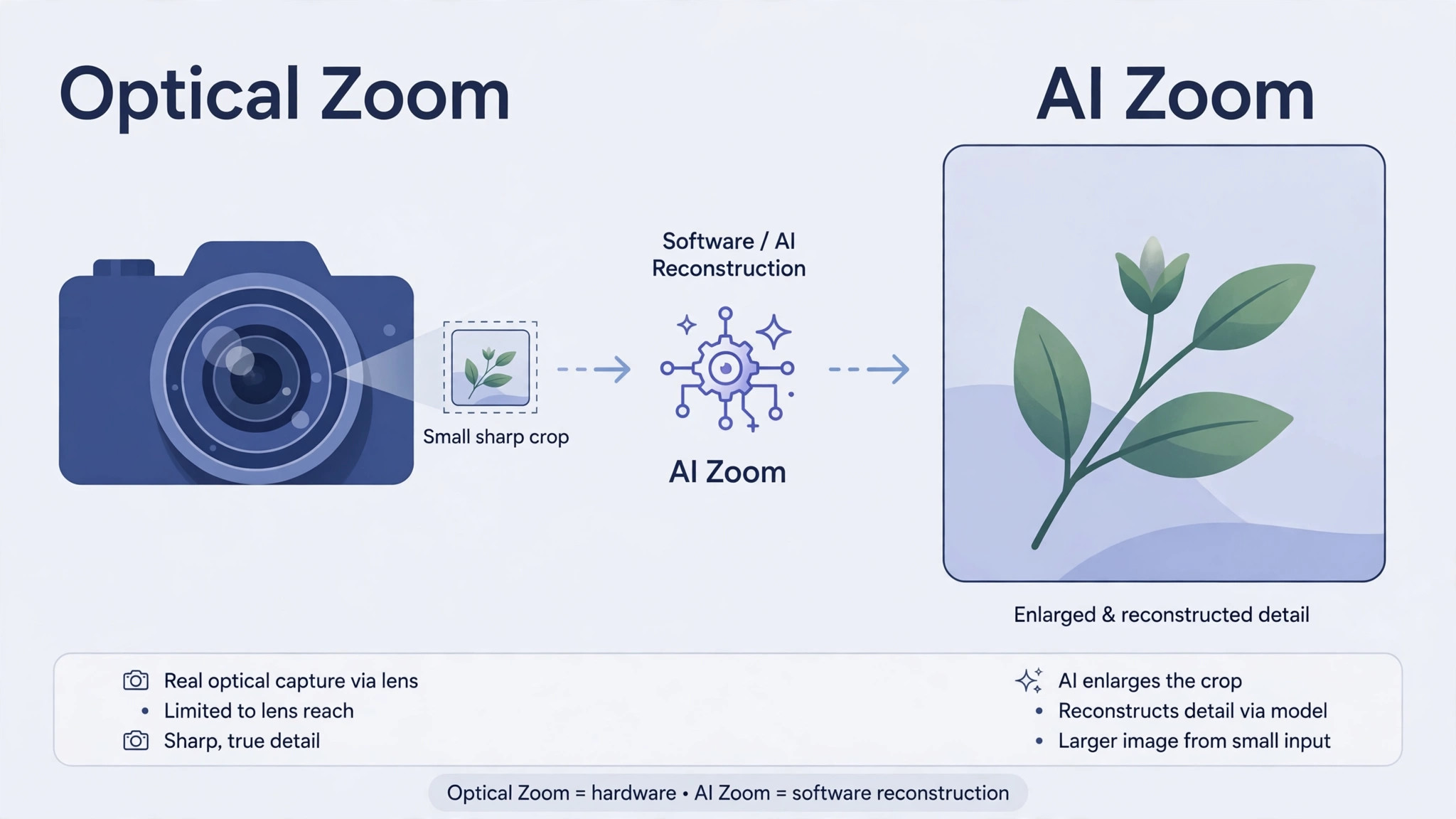
Start with the most important fact in this article: no phone has a true 100x optical zoom. A periscope telephoto lens gives a phone a real optical zoom of a few times — the lens physically magnifies the scene, the way binoculars do. Everything beyond that is a crop of the image, enlarged and rebuilt by software.
That rebuilding is where the 200 megapixels earn their keep. A very high-resolution sensor captures far more raw detail than a normal one, so when the phone crops into the centre of the image, there is more real information to work with. Then AI processing sharpens edges, rebuilds textures and fills gaps. The result is best described as a small real optical zoom plus intelligent reconstruction — not a telescope, and not a lie either. It sits in between, and where it sits depends entirely on what you point it at.
Where AI zoom works well
- Signs and boards — a station sign, a menu board, a scoreboard across a stadium. Bold shapes and strong contrast reconstruct convincingly.
- Landmarks and buildings — towers, monuments and skylines have predictable patterns the software handles well.
- Wildlife and distant subjects — a bird on a wire or an animal at the zoo, where the alternative is no photo at all.
Where it invents detail
- Faces — at extreme zoom the software guesses at features, and people can come out looking subtly wrong, like a painting of themselves.
- Text — small print is the hardest test of all. Letters get rebuilt into shapes that look like writing but may not say what the original said. Never trust a 100x photo as evidence of exact wording.
- Fine, irregular textures — foliage, hair, crowds — anywhere there is no predictable pattern to reconstruct from.
A good rule: AI zoom is excellent for seeing what is there, and unreliable for proving exactly what it looked like. Enjoy the view; do not zoom a stranger’s document and call it a photograph.
Why Megapixels Stopped Mattering — and Processing Took Over
If 200MP sounds like “sixteen times better than 12MP,” that is the marketing doing its job. In practice, these phones rarely save full 200-megapixel photos. The sensor’s pixels are grouped together — many small pixels acting as one bigger, more light-sensitive pixel — to produce a normal-sized photo with better light capture. The huge number describes the sensor’s raw material, not the size of your pictures.
What actually decides photo quality now is processing: the image engine that merges exposures, balances colour, removes noise and decides what the scene should look like. That is why OPPO gives its engine a name — LUMO — and why the same sensor hardware can produce visibly different photos in different phones. Same eye, different brain, different photograph.
This is also why the camera story and the chip story are now the same story. The image engine runs on the processor’s camera hardware, and the gains compound: a stronger chip means faster merging, better night shots and smarter zoom reconstruction. We break down that processing side in our guide to the new flagship phone chips — read it alongside this one and the whole camera picture makes sense.
Motorola’s signature 27 adds one more idea worth knowing: a dedicated action sensor (an EVS sensor) whose job is capturing fast movement. Sports, kids and pets are where phone photos most often fail — not from low resolution, but from motion blur. A sensor specialised for action attacks the failure people actually have, instead of the specification that looks best on a box.
The Features That Genuinely Help Normal People
Forget the zoom number for a moment. These are the late-2026 camera improvements that change everyday photos:
- Faster night modes. The Pixel 11’s quicker Instant Night Sight is the model here: night shots that used to need several seconds of holding still now happen fast enough to freeze people. Night photos of friends stop being blurry suggestions of friends.
- Magic Capture-style automation. Pixel 11’s Magic Capture takes an automatic series of photos and video with one tap, so the “perfect moment” is chosen from a burst instead of depending on your timing. For group photos and children, this quietly fixes more ruined shots than any zoom.
- Action and sports capture. Dedicated action sensing and faster processing mean the school match and the birthday-candle moment survive as sharp frames instead of streaks.
- Real-time AI video enhancement. Colour and contrast improved while you record, not in an editing app afterwards — most people never edit video, so help that arrives during filming is help that actually gets used.
- Extract a photo from video. Film the moment, pull the best frame out later. It turns “I missed the photo” into a problem that mostly stops existing.
Notice what these have in common: none of them is a bigger number. They are speed, timing and intelligence — the unglamorous things that decide whether a photo survives.

Before You Pay Extra: 5 Questions to Ask
Camera flagships cost real money. Before paying the premium, ask:
- How far do I actually zoom? If your honest answer is “rarely past 5x,” a strong main camera beats a spectacular telephoto you will use twice a year.
- Do I shoot more at night or in daylight? Night shooters should prioritise fast night processing; daylight shooters are well served by almost any modern flagship.
- What do I photograph most — people, action, or scenery? People need honest skin tones and good faces at normal distances. Action needs capture speed. Scenery is where zoom claims matter most.
- Will it last a full day of shooting? Heavy camera and AI processing drains batteries. Pair the camera with a phone whose endurance is proven — the new high-capacity cells we explained in silicon-carbon batteries are part of the camera story too.
- Am I paying for a number or a result? Look at sample photos of your subjects — your family, your sport, your streets at night — not the manufacturer’s cherry-picked gallery.
The Verdict
Real improvement or marketing? The processing is real: faster night capture, smarter bursts, better action shots and reconstruction that makes distant subjects genuinely visible. The numbers are marketing: 200MP describes raw material, not picture size, and 100x describes a crop rebuilt by AI, not a lens. Buy these phones for the photographs they take at the distances and in the light you actually live in — and the best of them will impress you. Just read “100x” the way it deserves to be read: as a very clever estimate, not a measurement.