

Quick answer
Imagine walking into your kitchen, arms full of groceries, and asking your smart speaker to turn on the overhead lights. Instead of the instant glow you're used to, you get nothing. You stand there in the dark. Quick SummaryWhy Your Google Home Is Acting So Slow Right NowThe Minute-Long Delay NightmareFrom Smart Assistant to PaperweightWhat Google Says a Fix Will Look LikeThe Reddit Confirmation from Nest Support Google says a fix is in the works for Home device delays Ten seconds pass. Then thirty. As you start fumbling for a physical switch with your elbow, the lights finally flicker on.Point is, it's incredibly annoying. Lately, Google Home users have been experiencing exactly this painful latency. Simple voice commands are taking forever to process, or they're timing out completely.Thankfully, google says a fix is officially in the works, meaning we won't have to live with these sluggish responses forever.. And yes, this isn't a minor glitch.
Imagine walking into your kitchen, arms full of groceries, and asking your smart speaker to turn on the overhead lights. Instead of the instant glow you’re used to, you get nothing. You stand there in the dark.
Quick Summary
- Why Your Google Home Is Acting So Slow Right Now
- The Minute-Long Delay Nightmare
- From Smart Assistant to Paperweight
- What Google Says a Fix Will Look Like
- The Reddit Confirmation from Nest Support
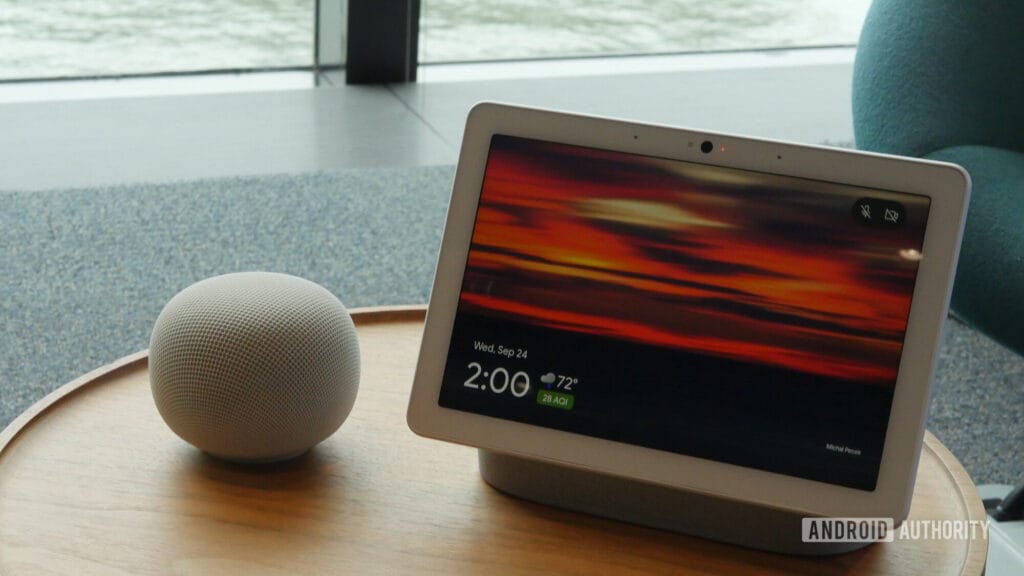
Ten seconds pass. Then thirty. As you start fumbling for a physical switch with your elbow, the lights finally flicker on.
It’s incredibly annoying. Lately, Google Home users have been experiencing exactly this painful latency. Simple voice commands are taking forever to process, or they’re timing out completely.
Thankfully, google says a fix is officially in the works, meaning we won’t have to live with these sluggish responses forever..
And yes, this isn’t a minor glitch. For people who have built their entire daily routines around voice automation, a slow smart assistant ruins the whole experience. When your house takes a full minute to respond to a basic command, the technology stops feeling futuristic and starts feeling like a chore.
For the past several days, smart home setups have felt decidedly dumb. You say a command, and then you wait. This lag defeats the entire purpose of voice control.
It’s faster to get up and walk across the room to flip a switch. Users across various online forums started complaining about delays stretching up to a full minute. That’s an absolute eternity when you’re waiting for a lock to open or a light to turn off..
Sometimes the device does nothing at all. You’re left wondering if it even heard you. You look at the flashing lights on top of your Nest Mini, hoping for a sign of life, only to be met with silence. It’s a frustrating breakdown of a tool we rely on daily.
When a smart speaker times out, it usually gives you a generic error message. It might chirp that it can’t reach the internet, or tell you to check your connection. But here’s the thing — your home Wi-Fi is perfectly fine.
Your phone is loading video streams instantly, and your computer has a strong signal. The bottleneck isn’t your router. It is entirely on Google’s backend servers.
This outage shows how fragile our voice-controlled setups are when cloud services stumble..
The official word on this issue did not come through a massive press release. Instead, it surfaced where most tech complaints live: Reddit. On a growing thread filled with frustrated users, the official Google Nest Community account posted an update to acknowledge the problem. They confirmed that the engineering team is actively tracking the increased latency and connection timeouts.
The representative stated that they are working on a solution as quickly as possible. They promised to circle back to the thread once the issue is fully resolved. It’s good to see Google acknowledging the bug directly, but the lack of a timeline is still causing some anxiety among users.
When Can We Expect the Update?
And yes, that is the big question. Since the initial community post, there has been no further update. This suggests that the fix is still being coded, tested, or deployed gradually. The good news is that because this is almost a server-side issue, you probably won’t have to manually update your Nest Hub or Nest Audio speakers. The fix should roll out automatically in the background. One day soon, your devices will start responding instantly again.
Behind the Scenes of the Smart Home Lag
Is Gemini Integration to Blame?
And yes, it’s hard to ignore the timing of this massive slowdown. Google has been aggressively pushing its new Gemini AI model into the Google Home ecosystem. We all want smarter assistants that can understand context and hold natural conversations. But those advanced features require a massive amount of computing power. If Google is routing more voice traffic through their new AI servers, it might be putting an unexpected strain on their network infrastructure.
Standard voice commands like “turn on the fan” should not require complex AI processing. They are simple, binary commands. But if the system is trying to run every request through a heavier AI pipeline, that could easily explain the sudden bottleneck. Google hasn’t confirmed this theory, but the timing is highly suspicious.
Cloud Latency vs. Local Processing
This whole situation highlights a fundamental flaw in modern smart homes. Almost everything we do relies on an active internet connection. When you tell a speaker to dim the lights, your voice is digitized, sent to a server farm hundreds of miles away, translated into a command, sent back to your router, and finally routed to your smart bulb. If any link in that chain slows down, your home halts.
That’s why many smart home enthusiasts are moving toward local control systems. Platforms that process commands inside your own four walls don’t suffer from cloud outages. While Google has made some efforts to introduce local SDKs for smart devices, the voice processing itself still heavily relies on the cloud.
What to Do While Google Says a Fix Is on the Way
Quick Troubleshooting Steps That Might Help
While we wait for the official patch, there are a few things you can try to make life easier. First, try power-cycling your primary Google Home devices. Unplug your Nest speaker, wait about ten seconds, and plug it back in. It won’t fix Google’s server issues, but it can clear out local memory clogs that might be making the delay even worse.
📚 Further Reading
Frequently Asked Questions
A: Google Home users are experiencing painful latency and delays where simple voice commands, such as turning on lights, take up to thirty seconds to process or time out completely.
A: Yes, Google has officially acknowledged the sluggish response times and confirmed that a fix is currently in the works to resolve the latency.
A: Users are reporting that basic voice commands are taking anywhere from ten to thirty seconds to execute, or failing to respond entirely.
A: The delays disrupt daily routines built around voice automation, turning what should be a easy, futuristic smart home experience into a slow and frustrating chore.
No, you do not need to replace your hardware. This is a system-wide glitch, and Google is actively working on an official software fix to restore normal response speeds.
At a glance
| Device | Common Symptom | Typical Delay | Suspected Cause | Temporary Workaround |
|---|---|---|---|---|
| Nest Mini | No response / silent | Up to 60 seconds | Server‑side latency (possible Gemini AI load) | Power‑cycle (unplug 10 s) |
| Nest Hub | Slow response or timeout | 30‑60 seconds | Server‑side latency (possible Gemini AI load) | Power‑cycle (unplug 10 s) |
| Nest Audio | Delayed command execution | 30‑60 seconds | Server‑side latency (possible Gemini AI load) | Power‑cycle (unplug 10 s) |